
A Medical Director serves as the vital bridge between clinical practice and hospital administration. They are licensed physicians contracted to provide active oversight of clinical care, develop facility policies, lead quality assurance initiatives, and ensure the medical staff meets the highest standard of patient safety. Because these physicians possess immense influence over facility operations and patient referrals, their administrative contracts are heavily monitored by federal regulators to ensure their compensation never crosses the line into illegal referral incentives.
The Office of Inspector General (OIG) and the Department of Justice (DOJ) are actively escalating their enforcement of physician compensation agreements. Recent federal audits specifically target Medical Director engagements to verify that hospitals are paying for legitimate, documented administrative services rather than disguised kickbacks.
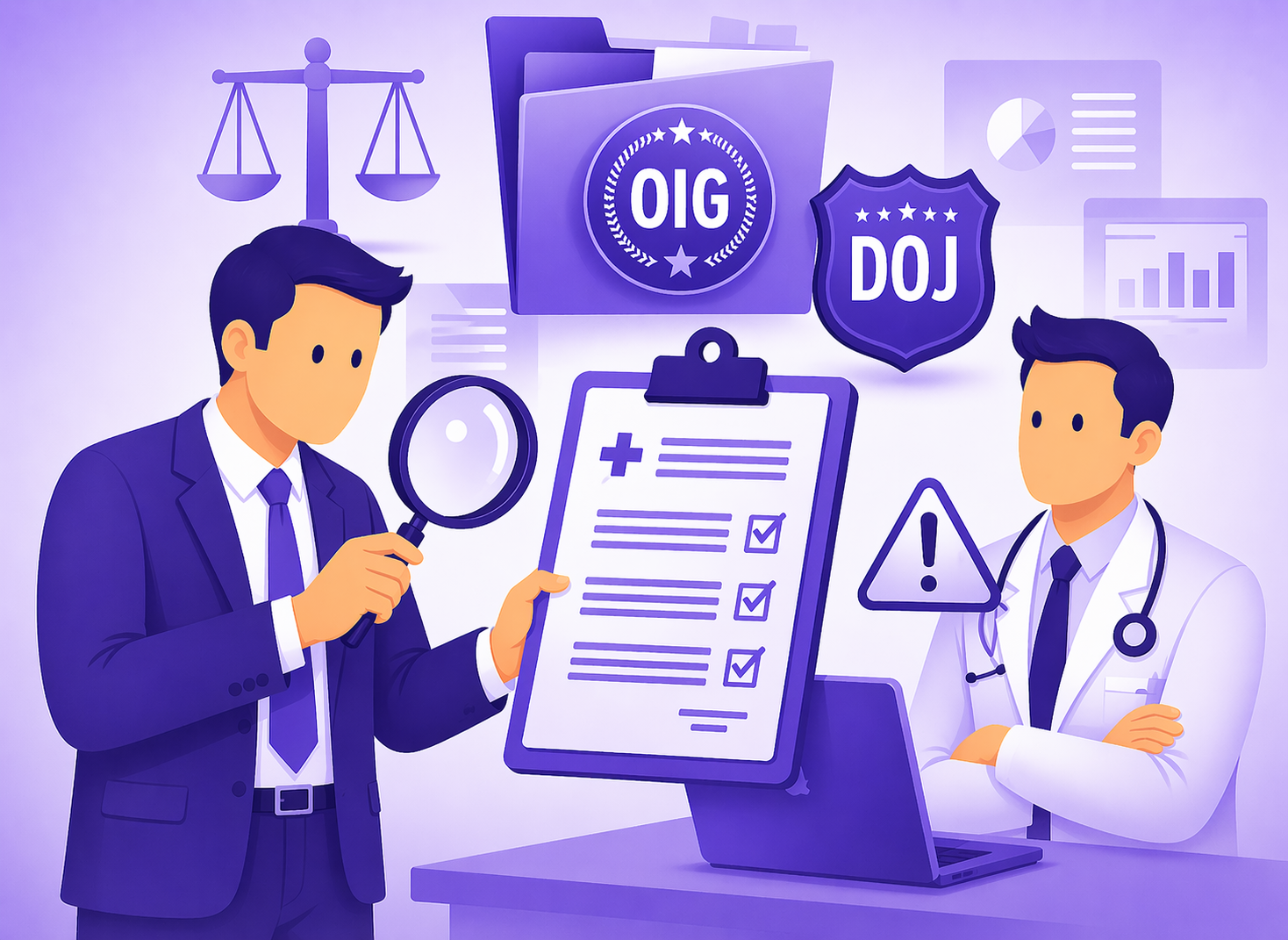

Healthcare compliance leaders know that the regulatory framework is unforgiving:
Get a Demo
Regulators are no longer just reading your contracts. They are auditing your physician time logs and payments to prove the physician actually performed the required duties.
Yet in practice, Medical Directorships are still managed through highly vulnerable manual processes:
Spreadsheets with inconsistent or retroactive entries
Email based approvals with no centralized audit trail
Time logs that fail to tie activities back to contract terms
Invoices generated without defensible digital attestations
This is where your organizational risk accumulates.
When documentation is fragmented or subjective, even a perfectly structured legal agreement becomes impossible to defend during a federal audit.
Our team has distilled the exact controls, documentation standards, and workflows that top hospital compliance teams rely on into three practical tools. These resources are designed to help you evaluate, standardize, and strengthen your current approach.
Access the full Medical Directorship Compliance Toolkit. Fill out the form to download all three resources to evaluate your current processes, identify exposure points, and implement stronger documentation standards across your entire organization.